A rare and serious lung disease
In pulmonary fibrosis, scarring makes the lungs stiff and less elastic. This can make it harder for oxygen to pass through the air sacs and into the bloodstream.
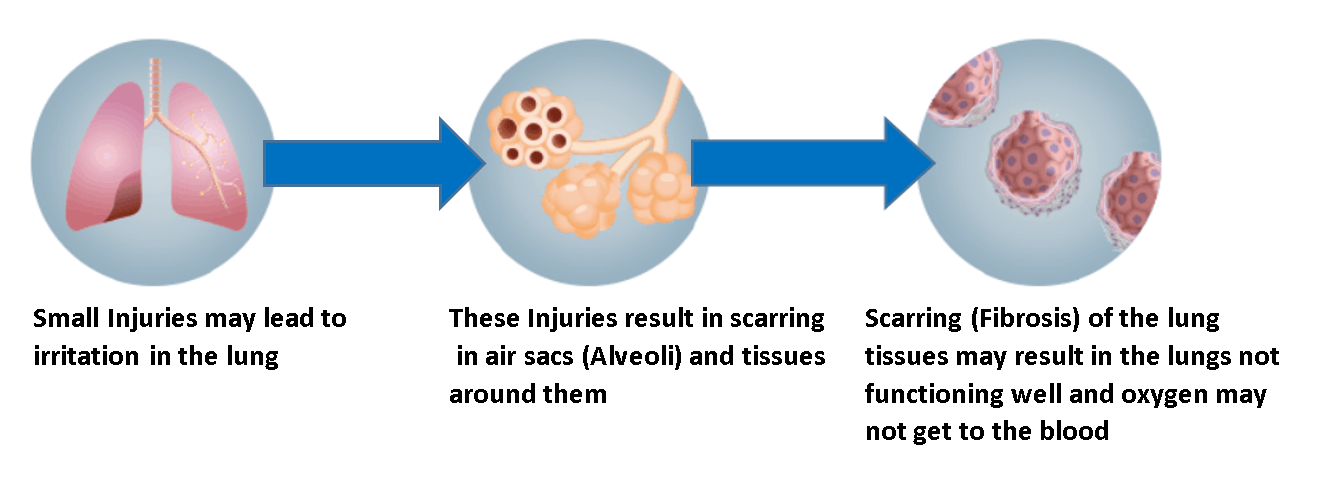
The fibrosis can reduce lung size and capacity. This may be reflected in pulmonary function tests used to diagnose or monitor pulmonary fibrosis. As scarring progresses, breathing may become harder and some patients may need supplemental oxygen.
IPF is progressive
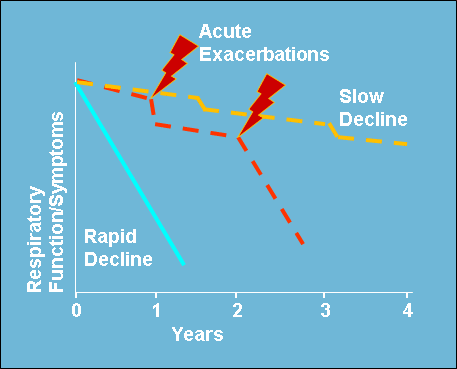
Over time, scarring becomes more widespread and lung function declines. Doctors cannot predict exactly how quickly this will happen; progression can be rapid for some people and slow for others.
Lung damage is permanent
There is currently no cure for IPF, but treatment options may help delay disease progression.
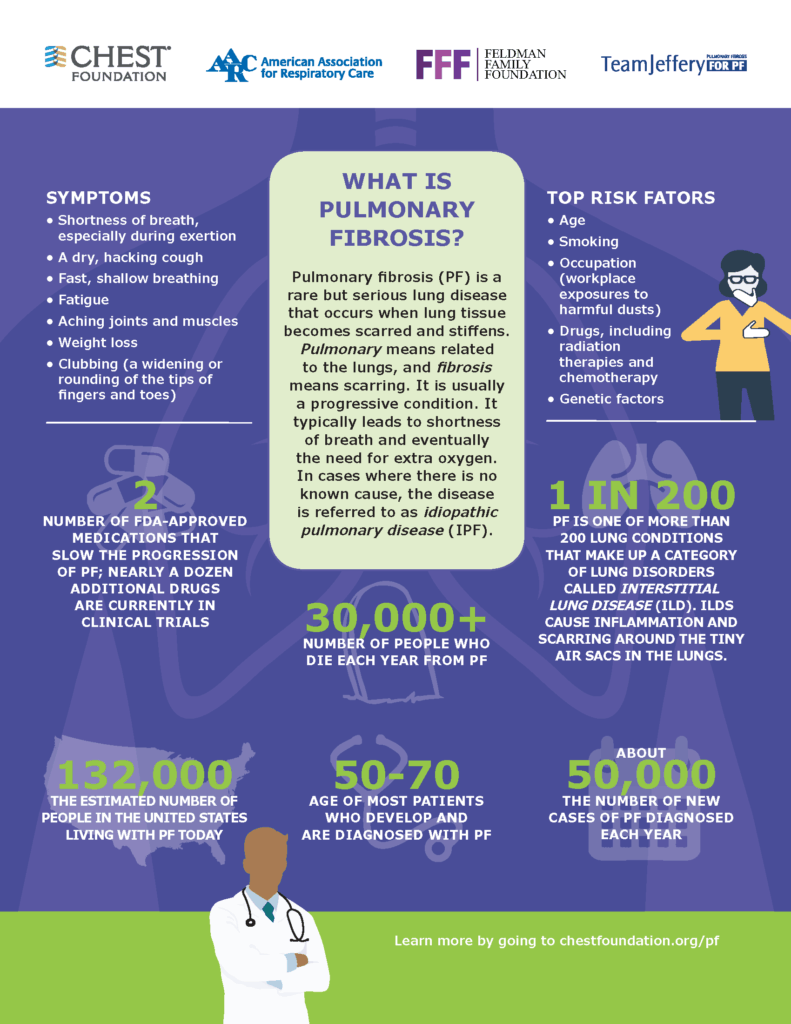
View pulmonary fibrosis overview graphic
Lung function can change over time
Progressive
Scarring caused by IPF can continue, and lung function can worsen over time.
Unpredictable
It is difficult to know how slowly or quickly IPF will progress. Each person's experience is different.
It describes how well the lungs breathe in and out and exchange gases such as oxygen. IPF can reduce lung function by causing permanent scarring around parts of the lungs.
Talk with your doctor about your lung function and how it affects your body.
How your doctor may test lung function
Doctors may use several types of tests to see how IPF is progressing. Your doctor will decide which tests are appropriate for you.
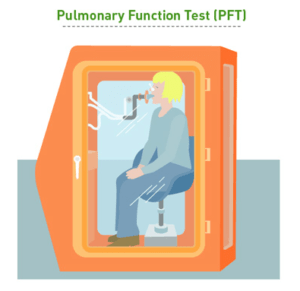
Pulmonary function tests
One example is forced vital capacity (FVC), which measures how much air you can exhale forcefully after a deep breath. A spirometer is used to generate the reading.

Exercise tests
Your doctor may look at walking distance, oxygen saturation while walking, or how quickly you recover after activity.
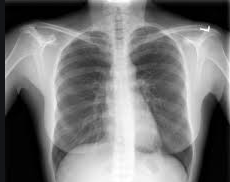
Lung scans
Scans can show what is happening inside the lungs. One type is a high-resolution CT (HRCT) scan.
Your treatment team may check FVC at visits. A decline over time may indicate decreasing lung function and progression of IPF. Test results are one part of the conversation between you and your healthcare team.
Living with pulmonary fibrosis
Changes in daily habits and routines may help improve quality of life with IPF. Talk with your healthcare team about approaches that are appropriate for you.
View quality-of-life guide — part 1

View quality-of-life guide — part 2
Starting a new medication
Specialty medications may require more steps than a regular prescription and may not be picked up at a local pharmacy.
- Referral. The prescription may be completed on a referral form, signed by the physician, and sent to the manufacturer's hub. You may also be asked to sign.
- Benefits verification. The hub may verify insurance benefits, identify an in-network specialty pharmacy, and send the physician's office a prior-authorization request.
- Prior authorization. The request is submitted to insurance for review. The process can take time, and a denial may be reviewed for a possible appeal.
- Copay assistance, when needed. If a copay is difficult to afford, assistance may be available through foundations or, for eligible non-Medicare patients, manufacturer programs. The physician's office may help guide the process.
- Shipping. Once approved, the specialty pharmacy will arrange shipment. Calls may come from the hub or specialty pharmacy, often from toll-free numbers, and may require a response before medication can be shipped.
- Ongoing support. Some medications may involve a specialty-pharmacy nurse. Work with your physician, office nurse, pharmacist, and other members of your care team throughout the process.
The hub, pharmacy, drug company, or assistance foundations may contact you to verify information such as income and assets.
Treatment benefits and side effects may happen on different timelines
Idiopathic pulmonary fibrosis is a serious condition. Medications intended to slow the disease may show benefit gradually over months. Some patients improve lung function; for many, the goal is to help prevent further loss of lung function and poor outcomes.
Side effects can occur earlier. Be patient and talk with your doctor or nurses about managing side effects. Your clinician may discuss changes in how medication is increased or temporary dose adjustments when appropriate.
Do not change or reduce medication on your own without discussing it with your doctor's office.
Financial assistance
For Medicare and Medicaid patients, nonprofit foundations may be able to provide copay support. Your physician's office, the manufacturer's hub, or specialty-pharmacy contacts may be able to help with the application process.
FDA-approved agents listed on MedEd Center
Ask MedEd is intentionally not active on this IPF prototype yet. The page is ready for a future IPF-specific evidence set without sharing Adempas sources.