Overview
Pulmonary hypertension is a type of high blood pressure that affects the arteries in your lungs and the right side of your heart.
In one form of pulmonary hypertension, tiny arteries in your lungs, called pulmonary arterioles, and capillaries become narrowed, blocked or destroyed. This makes it harder for blood to flow through your lungs, and raises pressure within your lungs’ arteries. As the pressure builds, your heart’s lower right chamber (right ventricle) must work harder to pump blood through your lungs, eventually causing your heart muscle to weaken and fail.
Some forms of pulmonary hypertension are serious conditions that become progressively worse and are sometimes fatal. Although some forms of pulmonary hypertension aren’t curable, treatment can help lessen symptoms and improve your quality of life.
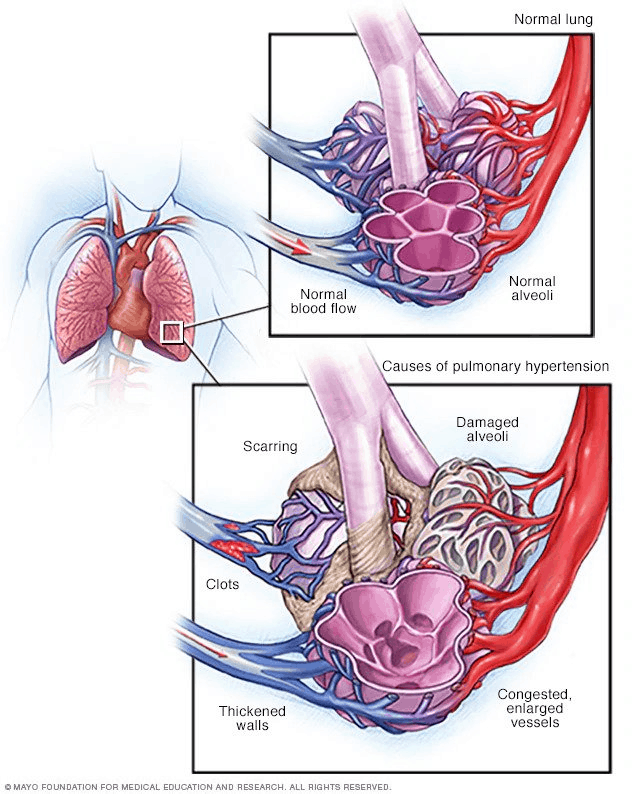
Source: Mayo Clinic
Types of pulmonary hypertension
There are many types of pulmonary hypertension. They have very different origins and very different treatments. It is important to know which kind of pulmonary hypertension you have.
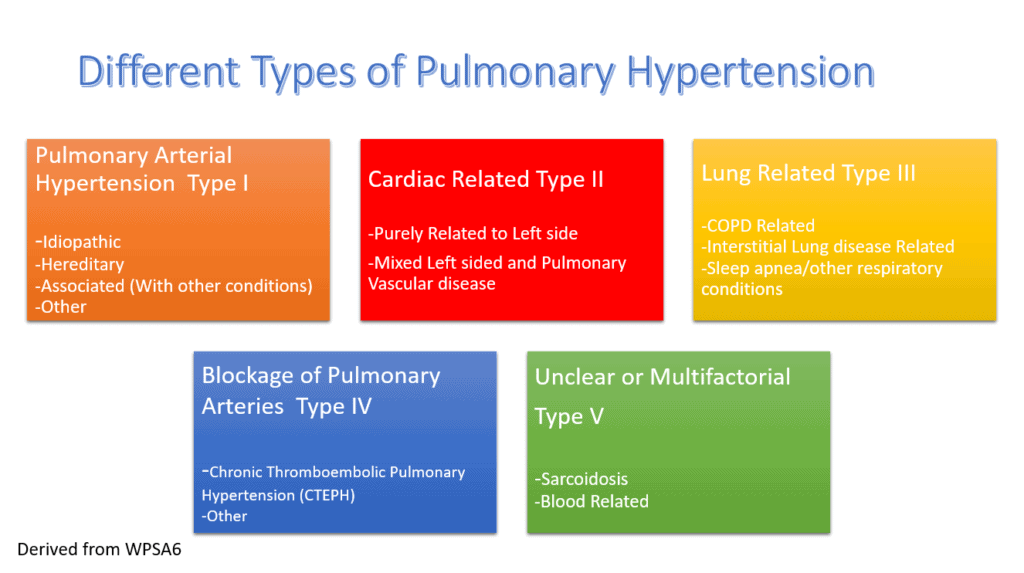
PAH education brochure
Insights on PAH brochure
This brochure offers easy-to-understand information on PAH, including symptoms, diagnosis and treatment.
PAH medications
PAH medications work through several different pathways. The links below take you either to a MedEd Center V2 page or, where MedEd does not currently host a sponsored page, to a verified manufacturer resource.
PDE5 inhibitors
sGC agonist
Endothelin receptor antagonists
Prostacyclins
- Tyvaso® (inhaled treprostinil)
- Orenitram® (oral treprostinil)
- Remodulin® IV (treprostinil)
- Remodulin® SQ (treprostinil)
- Veletri® (epoprostenol)
- Flolan® (epoprostenol)