Why extra oxygen?

Because it can help you live longer. Patients with lung disease with oxygen saturation levels below 88% (89% with heart failure or high red blood cell counts) at rest may significantly benefit from oxygen therapy. Patients with oxygen levels above 90%, even if abnormal (less than 96%), have not shown benefit.
Not all shortness of breath will be fixed with extra oxygen, but wearing oxygen during exercise for those who qualify at rest may help increase activity. Typically, patients are also required to wear oxygen during sleep if they need it at rest or with activity.
At home
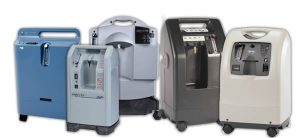
At home, a stationary concentrator with extra-long tubing will typically allow oxygen use. Oxygen concentrators take oxygen from the air, use electricity to concentrate it, and deliver it at the prescribed rate.
On the go
Portable tanks
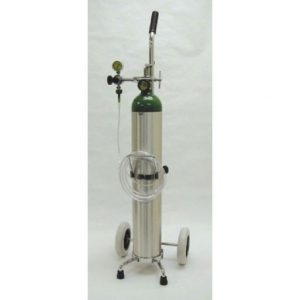
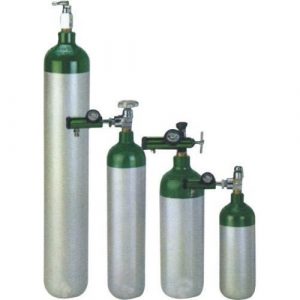
Portable tanks are cylinders of concentrated oxygen. They can deliver high rates, although they can be heavy and bulky. They are delivered to your home prefilled at regular intervals, typically weekly. Some systems can be filled at home from a concentrator.
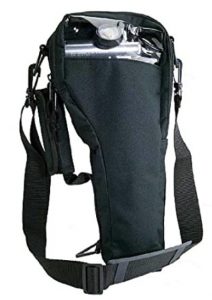
The amount of oxygen you need will determine whether you can use the smallest portable tank, a “B-tank,” which can be carried in a special backpack, or a larger “E-tank,” which requires a wheeled cart.
Liquid oxygen
Liquid oxygen can be less bulky and more compact and can provide higher flows than the smallest portable tanks, although it may be slightly heavier and may not last as long. It must be filled at home by the patient. Liquid oxygen must be handled with care during refilling because it can cause cold burns. Not every medical supply company carries this option.
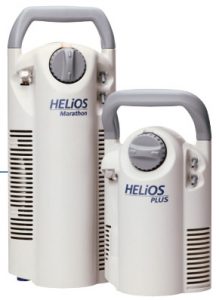
Portable concentrators
Portable concentrators can run on their own battery, a car battery, or electricity. They concentrate oxygen and work as long as the battery has power or electricity is available. Some can generate higher flows; others release oxygen only when you breathe in and are typically used for patients needing less oxygen.
Delivery and accessories
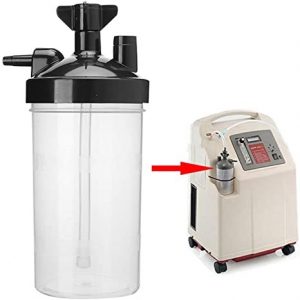
Humidifier
A humidifier can add humidity to a home oxygen delivery system to help keep nasal passages from drying out.
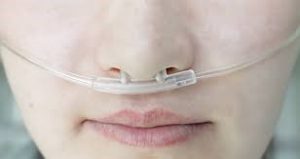
Nasal cannula
Typically, a nasal cannula brings oxygen to the patient’s nose. Cannulas come in many sizes. Longer tubing can be used at home and shorter tubing with portable oxygen. High-flow nasal cannulas are available when higher-flow oxygen is needed.
Reservoir tubing
Small reservoir bags worn on the face (“mustache”) or as a pendant can increase oxygen delivered for patients with greater needs. These are also known as Oxymizers. The reservoir concentrates oxygen between breaths and delivers a bolus of 80–100% oxygen with each breath. This normally allows a lower oxygen flow so a tank can last longer. Reservoir tubing can only be used with continuous-flow oxygen.
Choosing a system
You will typically need a home concentrator and a portable system.
Medicare and most insurance companies will cover a home concentrator and some type of portable oxygen. The portable oxygen may be a tank, liquid oxygen or a portable concentrator depending on insurance allowance and the medical supply company’s product availability. The smallest lightweight concentrator is often the most desirable but is not always covered, so some patients obtain these on their own.
Consider the weight of the devices. Smaller concentrators are lighter and easier to carry but deliver lower rates of oxygen. Portable concentrators can provide oxygen as long as electricity or charged batteries are available. Liquid oxygen and larger portable tanks can be used at higher flows but last only until their reservoirs run out; duration varies by size and flow rate.
The amount of oxygen prescribed by your healthcare professional may limit which systems are appropriate because not every system can deliver every flow rate.
Who can help?
Your care provider or Durable Medical Equipment (DME) company can help you select the right combination. The DME company may be selected by your healthcare provider or may be one of the companies allowed by your insurance plan.
Compare portable oxygen concentrators and their capabilities. Ask your DME which devices are actually available to you.