What is Acthar Gel?
- Acthar Gel is a prescription medication that is FDA approved for the treatment of multiple conditions, including symptoms of sarcoidosis, and has been used for many years.
- Acthar contains the hormone ACTH, which stands for adrenocorticotropic (“a-DRE-no-cor-ti-co-tropic”) hormone.
- Acthar is a gel when refrigerated; at room temperature, it changes to liquid form, ready for injection. Acthar should be kept refrigerated (36°–46°F or 2°–8°C) between uses.
Only your healthcare provider can determine if Acthar is right for you.
- Acthar is believed to work with your immune system to help impact inflammatory and immune processes.
- Acthar is not a steroid, but one of the ways it is thought to work is by helping your body produce its own natural steroid hormones.
- Acthar is designed to provide a prolonged release of the medication after it is injected.
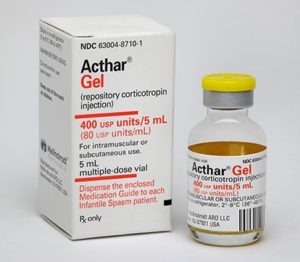
How Acthar is administered
Current labeled dosing for symptomatic sarcoidosis: Dosing is individualized. For indications other than infantile spasms and acute multiple-sclerosis exacerbations, the usual labeled dose is 40 to 80 units given intramuscularly or subcutaneously every 24 to 72 hours. Your prescriber determines the dose and whether tapering is needed.
- Acthar is an injection that can be given preferably subcutaneously (beneath the skin) or intramuscularly (into the muscle).
- Acthar should never be given intravenously (into a vein), by mouth, or in any area except beneath the skin or into the muscle.
- Acthar can be self-injected or given to you by a friend, family member, caregiver or healthcare provider.
- Your doctor will advise you on how and where to inject Acthar.
Meet Kerry, an Acthar patient
Learn about Kerry’s experience living with sarcoidosis and how Acthar helped to manage her symptoms.
Important safety information
DO NOT take Acthar until you have talked to your doctor if you have any of the following conditions:
- A skin condition called scleroderma
- Bone density loss or osteoporosis
- Any infections, including fungal, bacterial or viral
- Eye infections, such as ocular herpes simplex
- Had recent surgery
- Stomach ulcers or a history of stomach ulcers
- Heart failure
- Uncontrolled high blood pressure
- Allergies to pig-derived proteins
- Have been given or are about to receive a live or live attenuated vaccine
- Suspected congenital infections in children under 2 years of age
- Cushing’s syndrome or Addison’s disease
Tell your doctor about any other health problems that you have. Give your doctor a complete list of medicines you are taking. Include all nonprescription medicines, vitamins and herbal supplements.
Use of medication
Injecting beneath the skin
Acthar injection guides and downloadable resources
Acthar Gel side-effect management
The most common side effects of Acthar are similar to those of steroids. Possible management suggestions include:
- Fluid retention: elevate legs, limit salt intake and consider mild diuretics (water pills).
- High blood sugar: manage diet and seek medical help with sugar-lowering medications.
- High blood pressure: blood-pressure medications or adjustment of blood-pressure medications may be considered by your healthcare team.
- Behavior and mood changes: get help from a psychiatric medical professional.
- Changes in appetite and weight: manage diet, exercise and attend pulmonary rehabilitation as appropriate.
Decreasing the dose can be considered in some cases, followed by re-introduction of a higher dose of medication. Discuss any side effects with your healthcare provider. Most can be managed without stopping treatment.
Starting a new medication
- Your doctor will send your Acthar prescription to the Acthar Hub, a no-cost resource that provides information about benefits, insurance coverage and home delivery. A personal Case Manager is assigned to support you throughout the process.
- Your Case Manager at the Acthar Hub will work with your doctor and insurance company to determine your eligibility for coverage, and will work through any plan requirements and/or approvals.
- You may receive calls from your Case Manager to request additional information and provide status updates. Be sure to answer calls from toll-free numbers or blocked callers when you are expecting prescription-related outreach.
- The Specialty Pharmacy will call you to schedule delivery of your medication and track the shipment.
- Acthar will be delivered to your door.
Acthar Hub
The Acthar Hub is a no-cost resource that provides information about insurance coverage and home delivery. Your own personal Case Manager at the Hub will support you throughout the process of obtaining Acthar.
At the request of your doctor, your Case Manager will contact your insurance company to determine your coverage and any out-of-pocket costs, and work through plan requirements and/or approvals.
To learn more about the Acthar Hub, call 1-888-435-2284 Monday through Friday from 8 AM to 9 PM ET and Saturday from 9 AM to 2 PM ET.
Financial support
Commercial or private insurance
If you have commercial or private insurance, you may be eligible for the Acthar Commercial Co-pay Program. The program information on MedEd Center includes:
- $0 co-pay for eligible patients*
- Enrollment over the phone during the Acthar welcome call or any time you are speaking with your Case Manager
- Automatic processing by the Acthar Specialty Pharmacy with no attempt to collect a co-pay
Government insurance
If you have government insurance, you may be eligible to receive financial support through Independent Charitable Foundations. Your Case Manager can provide information about foundations, fund availability and contact information. You are responsible for applying for funding, and Mallinckrodt does not determine foundation eligibility criteria or which patients receive assistance.
No insurance coverage
If you do not have insurance coverage, you may be able to receive financial support through the Acthar Patient Assistance Program. Mallinckrodt provides Acthar at no cost to eligible patients with a valid, on-label prescription who have no insurance, are underinsured or are rendered uninsured. Your Case Manager can transfer you to the program to determine eligibility.
*The Acthar Commercial Co-pay Program provides drug co-pay assistance of up to $25,000 per calendar year for each eligible patient. This program is not for patients receiving prescription reimbursement under federal-, state- or government-funded insurance programs or where prohibited by law. Additional terms, conditions and eligibility criteria apply. Mallinckrodt ARD, Inc. reserves the right to terminate or modify this program at any time without notice.
Acthar Patient Assistance Program eligibility criteria include a valid Acthar prescription for an FDA-approved indication, permanent U.S. residency, household income at or below 700% of the Federal Poverty Level, and possible random income verification to determine eligibility.
Patient support and expectations
Expectations
Sarcoidosis is a serious condition. Medications designed to fight the disease typically show benefit slowly, over months, with many needing 3 to 6 months for maximum effect. Side effects can occur earlier. Your body may adjust over time or with additional management, which may also take 2 to 3 months.
Sometimes slowing a planned increase or reducing medication for a while may allow your body to adjust. Discuss changes with your doctor’s office before taking action on your own.
Life with sarcoidosis
Good health practices include:
- Getting regular check-ups with your healthcare provider
- Eating a well-balanced diet with a variety of fresh fruits and vegetables
- Drinking 8 to 10 8-ounce glasses of water a day
- Getting 6 to 8 hours of sleep each night
- Exercising regularly, and managing and maintaining your weight
- Quitting smoking
- Avoiding exposure to dust, chemicals, fumes, gases, toxic inhalants and other substances that can harm your lungs